Status: USED
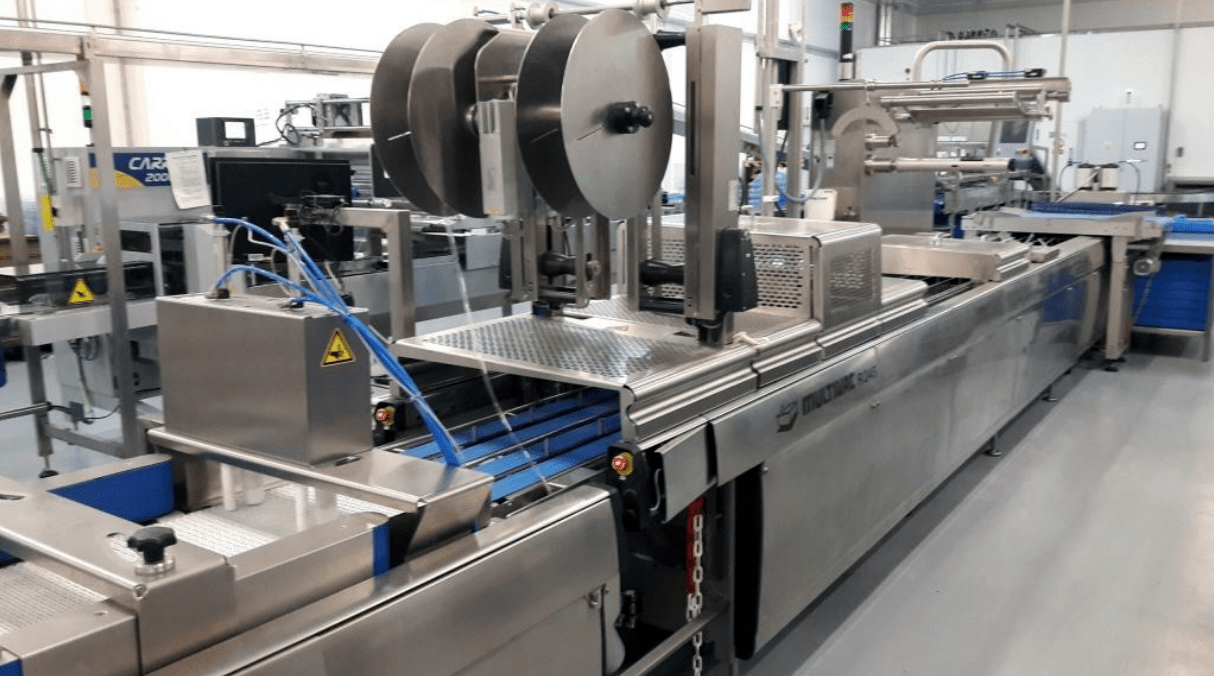
The MULTIVAC R 245 is a highly customizable, industrial-grade thermoforming packaging machine (often called a rollstock or deep-draw packaging machine). It sits in MULTIVAC’s high-output segment and is widely used across the food, medical, and pharmaceutical industries for automated, high-volume vacuum and modified atmosphere packaging (MAP).
Core Specifications & Capabilities
The exact footprint of an R 245 depends on how it is configured (such as frame length and loading areas), but a standard build typically aligns with these general specifications:
- Chassis & Build: Made entirely of stainless steel with MULTIVAC’s Hygienic Design (IP65 washdown rated), making it fast and easy to sanitize for strict food safety or medical cleanroom (GMP) conditions.
- Film Compatibility: Handles both flexible and rigid bottom forming films (like plastic or paperboard composites), as well as various top web materials (including flexible plastics, foils, or Tyvek for medical sterilization).
- Typical Dimensions: Frame lengths vary widely based on production needs—often ranging from 6,000 mm to over 9,000 mm long—to accommodate multi-row dies and extensive automatic loading/printing zones.
- Power Consumption: Usually rates around 10 kW to 16.5 kW depending on the integrated forming and cutting tools.
How the Process Works
The machine functions as a continuous, automated form-fill-seal line, executing these stages sequentially:
1.Thermoforming:Bottom Web.
The bottom film is fed from a large roll into a heating and forming die. Using heat, vacuum pressure, and sometimes mechanical plugs, the film is pressed down to create custom-shaped pockets or trays.
2.Loading / Filling:Manual or Automated.
The formed trays advance into an open loading zone (the knee-free area). Products—such as sausages, cheese blocks, medical kits, or portioned catering cups—are placed inside either by hand or via robotic loaders.
3.Sealing & Atmosphere Management:Top Web Integration.
The top film unrolls over the filled trays. The packaging chamber pulls a vacuum to remove oxygen and can optionally inject gas (MAP) to extend shelf life before heat-sealing the top and bottom layers together.
4.Marking & Inspection:Inline Quality Control.
The sealed packages pass beneath integrated systems like traverse printers (e.g., Bell-Mark or thermal inkjet) to apply expiration dates, lot numbers, or barcodes, alongside inline vision inspection systems.
5.Cutting & Separation:Final Output.
Guillotine blades, roller shears, or cross-cut punch dies slice through the film grid to separate individual packages. Scraps are cleanly wound onto a residual trim collector, and the finished products roll onto a modular conveyor belt.
Common Applications
- Food Sector: Multi-pack portioning for catering (jam, butter, ketchup), vacuum-sealed meats, fish fillets, cheese blocks, and fresh pasta boxes.
- Medical/Pharma: Sterile medical devices, syringes, dental kits, and medical swabs requiring hermetic seals and precise traceability.